15 January 2025
7 Tips on why and how shippers should check all costs on a freight invoice
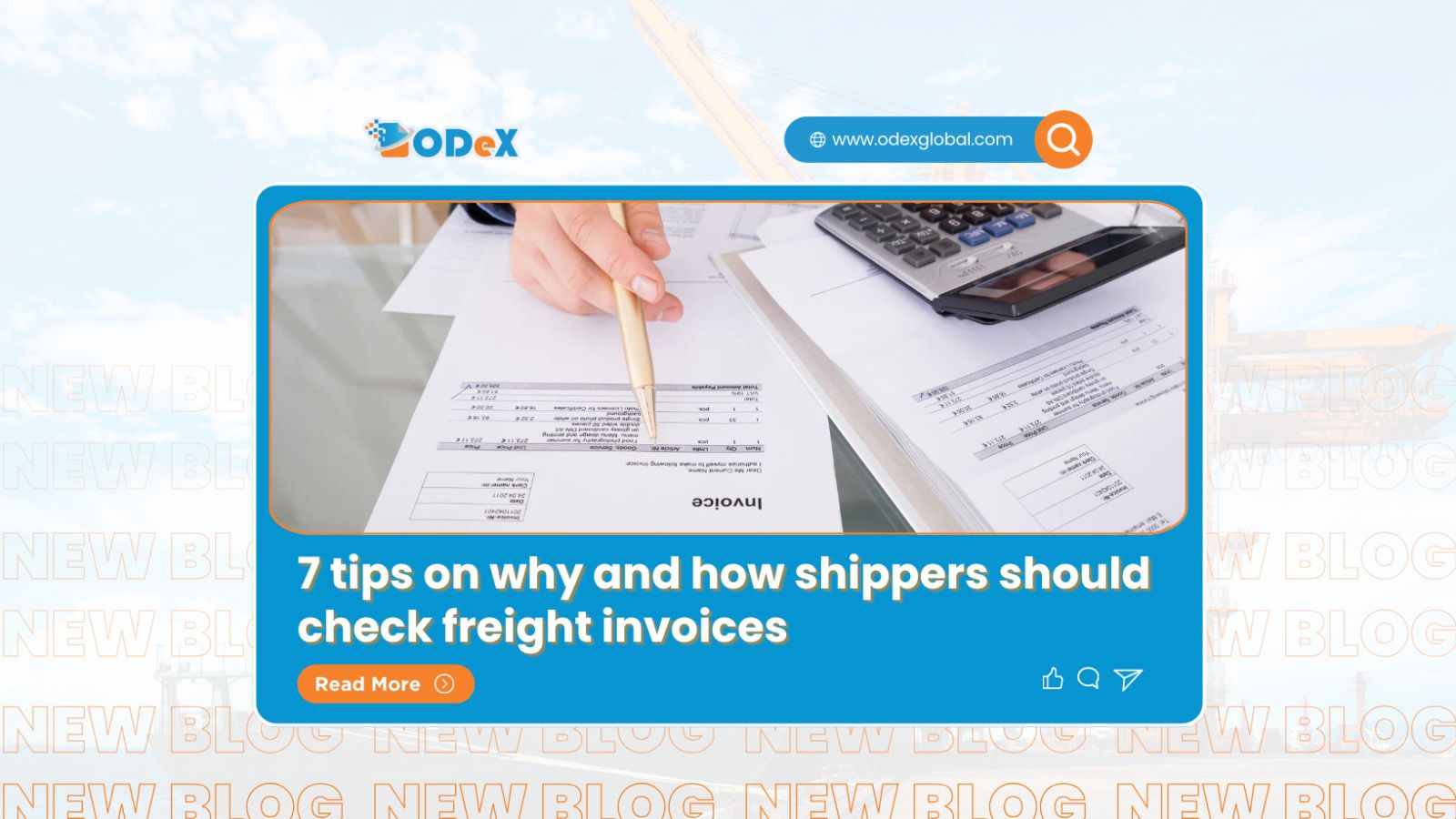
Freight invoices are an important part of the shipping process as it provides a detailed record of the various shipping and logistics costs involved in your shipment and the services that were rendered. However, in a lot of cases, freight invoices can be complex with several hidden, unclear, and uncontracted charges and fees. For shippers, understanding and reviewing these invoices accurately is critical to maintaining profitability and ensuring fair billing practices.
As per Supply Chain Brain , industry analysts are reporting that between 15% and 66% are inaccurate with one freight audit company reporting that 1 in 4 invoices it reviews are rejected due to inaccuracies and errors.
In this article, we look at reasons why shippers should check freight invoices, how it must be done and how ODeX’s digital payment solutions can assist in streamlining this process for greater efficiency and clarity.
1. Understand the charges
What to look for: Freight invoices typically list several charges, such as fuel surcharges, customs fees, handling fees, and terminal charges. Knowing what each of these charges represents and whether these services have been availed for your shipment is the first step that shippers must take.
Why it is important: Misinterpreting or overlooking these charges can result in overpayment. For example, failing to identify duplicate fees (could even be with different names for the same service) or unnecessary charges could lead to higher shipping costs than anticipated.
How to review: Develop a checklist of common charges and compare them with industry benchmarks. This practice helps shippers spot discrepancies quickly and ensures charges align with standard industry practices.
2. Compare invoice with quote
What to look for: Examine the invoice for discrepancies between the quoted rates provided before shipment and the final charges listed on the invoice.
Why it is important: Accurate billing is essential to avoid overcharges, which can strain your shipping budget. Variations between quoted and actual charges might indicate errors, over invoicing or additional fees that were not previously agreed upon.
How to review: Cross-reference the original quote with the invoice and conduct a full audit on the invoice. If discrepancies are identified, investigate their cause with the carrier or freight forwarder. Proactively address these issues to avoid repeated discrepancies in future shipments.
3. Hidden or ambiguous charges
What to look for: Look for vague or non-descriptive terms like "miscellaneous charges," "handling fees," or "administrative costs."
Why it is important: Hidden fees can significantly inflate your total shipping costs without providing clear justification. These ambiguous charges are often avoidable with proper clarification.
How to review: Ask your carrier or freight forwarder for detailed explanations of ambiguous charges. This practice not only eliminates unnecessary costs but also promotes a culture of transparency in billing practices.
4. Double-check currency rate of exchange for foreign currencies
What to look for: Review the currency exchange rate used for invoicing, especially for international shipments.
Why it is important: Currency exchange rates fluctuate, and an incorrect or outdated rate can increase shipping costs. Ensuring accuracy here is critical for maintaining cost control.
How to review: Verify the exchange rate applied using real-time updates from financial tools or platforms like ODeX. Double-check with your financial team to confirm that the exchange rate aligns with current market conditions.
5. Look out for penalties
What to look for: Check for charges related to delays, such as demurrage (holding containers beyond the free period) or detention fees.
Why it is important: Unnoticed delay charges can accumulate quickly, impacting your bottom line. Staying ahead of potential delays can prevent these penalties.
How to review: Utilise shipment tracking tools to monitor your freight’s progress in real-time. Maintain proactive communication with carriers and freight forwarders to address and resolve delays promptly.
6. Review calculation of duties and taxes
What to look for: Ensure taxes, duties, and value-added tax (VAT) are accurately listed on the invoice.
Why it is important: Errors in tax and duty calculations can result in financial losses or regulatory compliance issues. Overpaying taxes affects your cash flow, while underpaying can lead to fines or delays in customs clearance.
How to review: Use automation tools to validate that the correct tax rates are applied. Digital platforms like ODeX can simplify this process, reducing the likelihood of human error.
7. Leverage digital payment solutions
What to look for: Transition from traditional paper-based payment methods to digital solutions for processing freight invoices.
Why it is important: Digital payment solutions enhance transparency, reduce errors, and speed up the invoicing process. They provide a centralised system to track payments and ensure accurate billing.
How ODeX Helps: ODeX’s digital payment solutions automate invoice processing, providing full visibility into every charge. These tools help shippers streamline payments, minimise errors, and maintain organised financial records.
Conclusion
Freight invoices may seem complex, but taking the time to review them thoroughly is an essential best practice for shippers. By understanding charges, addressing discrepancies, and utilising digital tools, shippers can significantly improve cost management and billing transparency.
Leveraging platforms like ODeX not only simplifies this process but also ensures that shippers stay ahead in the increasingly digitised world of logistics.
As per ODeX’s customers, the efficiency, user-friendliness, and customer-centric approach of the ODeX platform in managing shipping and logistics documentation, payments, and workflows and “Great customer service; prompt issue resolution” they enjoy goes a long way in addressing invoice inaccuracies and errors effectively.
By adopting these seven tips, shippers can navigate freight invoices with confidence and maintain better control over their shipping costs.


.jpg)