15 March 2018
Shipbreaking - A Necessary Evil
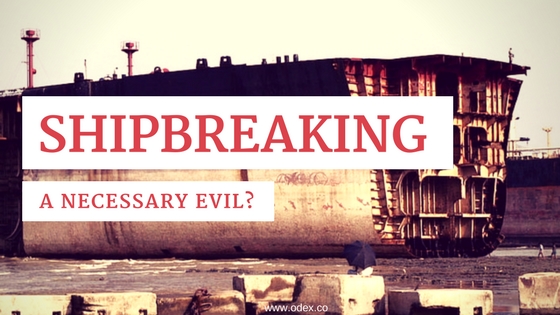
Have you ever wondered about whatever happens to the huge ships that no longer function properly or have already served their time?
The answer might shock you. As per reports, an estimate of around 200-800 end-of-life or worn-out vessels are dismantled every year. Even though it is a mammoth business on a global scale, shipbreaking is a dangerous procedure and it involves a lot of life risk or hazards for the laborers in this profession.
The dismantling or breaking down of a ship is carried out in a shipbreaking yard where the different parts of a vessel are torn apart into pieces, with the intention of disposing them completely or selling the usable parts.
The raw materials that are extracted after the long process, are collectively known as the scrap, and mainly consists of steel that is recycled for further use.
The modern-day ships have an average span of 25-30 years of service after which, they gradually start to corrode and suffer from metal fatigue. As time passes, these ships cost a great deal of maintenance and constant harassment for the owners and it is the best to strip them down.
The entire procedure is very time consuming and labor intensive, where all the damaged equipment, engine parts, fittings etc. are removed to leave the rest for recycling purposes.
The Prominent Shipbreaking Yards:
Due to the high population rate and increased availability of cheap labor, these four nations are the top nations in the world in the field of shipbreaking activities that deal with 85%of the world’s ship dismantling – India, Pakistan, Bangladesh, and China.
In fact, the world’s biggest shipbreaking yard (Alang) is located in Mumbai.
The main reason for Alang’s popularity is the favorable location – a fifteen-degree slope, a mud-free coast and a high tidal range, which makes it very easy for large vessels to glide into the shipyard.
Alang promotes a thriving business in shipbreaking and recycles a minimum count of 100 vessels per year. The other global centers of ship dismantling include Gadani (Pakistan) and Chittagong (Bangladesh).
These shipbreaking yards of the Third World countries employ millions of needy citizens, creating a huge industry that helps in feeding countless, hungry people.
According to the statistical reports, the main sources of ships come from Greece, Germany, and China. Some of the other famous shipbreaking yards include the Esco Marine (Texas), International Shipbreaking (Texas), Able UK, Aliaga yard (Turkey), Galloo yard (Belgium), Changjiang yard (China) etc.
The Negative Impact on the Environment:
Unfortunately, shipbreaking has been tagged as the “world’s most dangerous profession” since it involves numerous health hazards and also, harms our environment.
The release of toxic substances like hydraulic oils, lubricants, paints, asbestos, etc. excessively pollute our environment as they do not decompose. This enormous toxicity takes a huge toll on human life, wildlife, farming, marine life, etc. and overall has a negative impact.
During the cutting of the ship hulls, some of the large pieces are dumped on the beach that extensively pollute the oceans once the tide sets in. This, in turn, has wreaked havoc on marine life such as phytoplankton, benthic invertebrates, zooplankton, plants, reptiles, birds, mammals and obviously, fishes.
The negative effects of the shipbreaking activities were documented through the help of various statistical records, published reports and remote sensing imagery.
With extensive research, it has been deduced that the coastal soil and the sea waters reflect signs of a high pollution level, which will inevitably lead to global contamination due to atmospheric or water transport.
The main pollutants associated with the procedure consist of heavy metals, bacterial contaminants and petroleum hydrocarbons, which create adverse effects on the environment.
Moreover, the scrapped steel and other harmful residue mix with the soil ingredients of the scrapyards, thus rendering it impure and useless for a long term. Then the risk of accidents looms large as the profession is extremely accident-prone.
The main causes of such deadly accidents are collapsing of the hull, crashing of the loose metal plates or explosions due to the gas torches. These issues can be resolved by ensuring that the workers get adequate training on how to handle machinery before they start on the dismantling.
If these were not enough, the dismantling process can eventually affect the health of the workers in future due to the constant exposure to the dangerous chemicals like zinc, lead, arsenic, cadmium, chromium, and organotins. In most of the cases, the symptoms of the diseases do not even show up till many years.
The workers should be immediately provided with a provision of Personal Protective Equipment (PPE) to help secure their lives in future.
Is There a Proper Solution?
However, putting a lifelong ban on the ship dismantling profession is not the correct solution.
Instead, an extra effort should be made in carefully planning a strategy that would be both eco-friendly and economically viable. The provision of protective equipment and safety measures should be declared as compulsory.
In order to implement this new sustainable system, legislative support and judicial action are mandatory. The goal of coastal conservation needs to be achieved, along with lesser environmental pollution and minimum health risks.
The shipbreaking industry is a necessary evil that cannot be eliminated altogether but definitely needs to be controlled by a stricter stronghold.
Alternatively, some of the ships can be sunk to create artificial reefs, only after they are stripped down of any hazardous waste. A few of them are even kept in the museums.


.jpg)