1 June 2022
Types of Shipping Containers
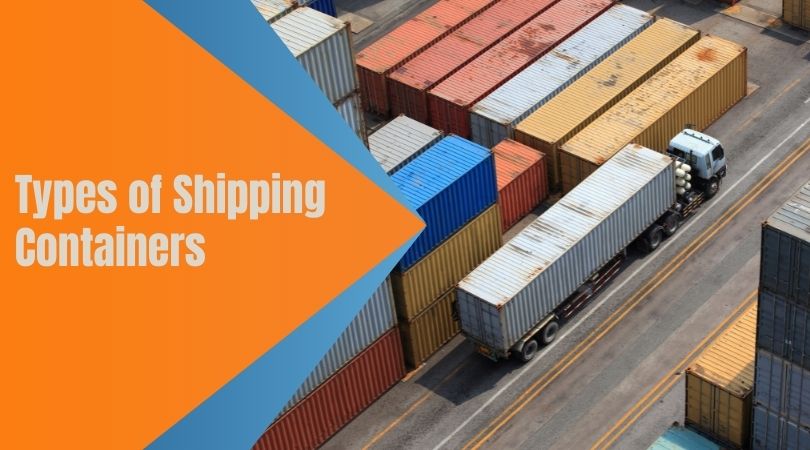
Shipping containers should be simple to rent or purchase, but the options can be overwhelming when you need containers for your business.
Container units vary in size, structure, materials and construction according to the type of cargo or services required. The following are some of the most commonly used containers.
1. Dry Storage Containers (General Purpose)
The containers are available in 10, 20, and 40-foot sizes. Because these containers do not have temperature controls, they are not suitable for storing edible and chemical products. Except for liquids, it is used for transporting all types of goods.
2. Open Top Containers
It gets its name because one can remove the roof of a container to make it more adaptable. Over-height commodities are transported in this container type. They contain lashing rings to secure the load (upper, lower, corner). In addition, instead of solid roofs, it has retractable bows.
3. Flat Rack Containers
A flat rack container is similar to a standard shipping container in design and dimensions. This is ideal for transporting vast amounts of freight. It's a collapsible container that you can use with or without walls in various scenarios.
4. Tunnel Containers
Tunnel containers resemble dry goods containers in appearance. They are convenient for delivering steel or other heavy metals since the open doors allow additional space.
5. Open Side Storage Containers
It has a door on one side in addition to a door on the other end, as the name suggests. Certain things fit within ordinary shipping containers, but only a few don't fit through the door. Open side containers will be best for those goods.
6. Refrigerated ISO Containers
This is a temperature-sensitive cargo, which is mainly transported using intermodal freight. The container's temperature can be kept constant with the help of an external power supply.
Weathering steel, often known as 'Cor-ten' steel, is used to make them.
7. Insulated and Thermal Containers
This container has temperature control so that it can withstand higher temperatures. As a result, it is appropriate for transcontinental goods transport.
8. Half Height Containers
Some items aren't substantial, but they're incredibly weighty. Packing a smaller quantity can help you manage the weight. Also, because these containers aren't as tall, you may stuff them full of heavier items without wasting room.
9. Tank Containers
So far, all of the containers we've talked about have been for dry products. What if you need to transfer a liquid, though? Tank containers are required for this. These are primarily used to transport chemicals, petrol, and other fluids and are anti-corrosive materials.
The selection of shipping container sizes is merely the first step in the process. After that, you have to screen all the different types of shipping containers to determine the one that best suits your specific needs.


.jpg)