16 October 2019
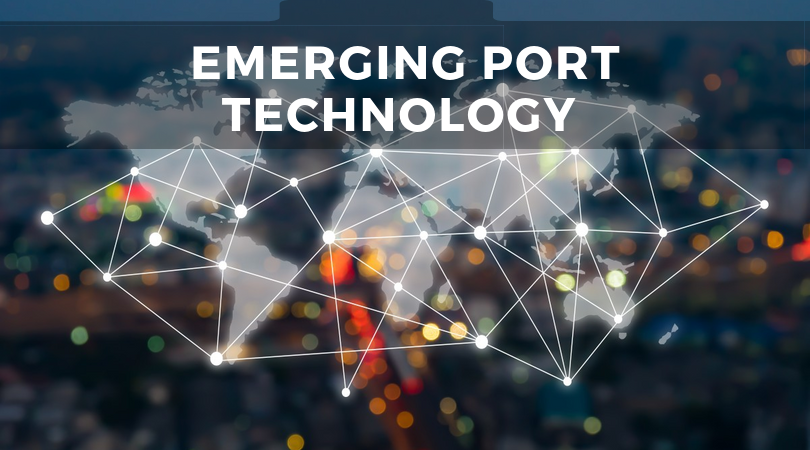
Emerging Port Technologies
The shipping and logistics industry is a massive marketplace, affecting a wide range of business sectors from e-commerce and fashion to manufacturing and high-tech.
As old processes begin to shift to meet the demands of the current internet age, logisticians and executives alike should understand the ways that these technologies are beginning to transform the industry.
Robotics
Robots, dissimilar automated machinery, are designed to perform several jobs at once, making their applications in the logistics industry virtually endless. This is particularly true of e-commerce operations, which require a heightened level of speed and efficiency to meet the rapid growth of online sales.
Robotics automate the process of storing and moving goods as they make their way through the supply chain. They're often used in warehouses and storage facilities to organize and transport products, a process referred to as intralogistics, but they can be used in other settings too. To stay competitive, other companies are now racing to fill their warehouses with similar models
Companies such as Amazon estimate that robotics could help it save $400 million to $900 million a year in fulfillment costs by reducing the number of times a product is “touched”.
Drones
Drones or UAV’s (Unmanned Aerial Vehicles) have been seen with a great impact on the freight & logistics industry, most remarkably in their predicted ability to organize new forms of rapid consumer delivery.
Drones have the potential to have an immediate sway on our ability to deliver products, both to dense, congested urban areas that would benefit from fewer cars on the road and to rural locations.
The EU Transport Commissioner Violeta Bulc has recently launched a European network for drone demonstration projects, in order to share knowledge on how to keep drone operations safe, secure and green.
Internet-of-Things (IOT)
IoT is a way of connecting physical objects with ports and terminals.
Through IoT, equipment can transfer data through sensor technology and make everyday operations independent, automated and efficient.
Today, the logistics industry uses IoT in diverse ways, from using temperature and humidity sensors that monitor supply-chain quality control to experimenting with IoT technologies that can detect when a package has been tampered with.
Communications through 5G Network
The evolution from WiFi to 5G connectivity will enable the ships and ports to get connected uninterruptedly. The ships will allow operators to access live audio as well as HD and 3D video from on-board recording devices, and remove the need for physical on-board surveys.
The report says that real-time decision making in ship management and autonomous operation will also be feasible.
In February 2019, Ericsson announced that it would collaborate with mobile service provider China Unicom to develop a 5G ‘smart’ harbour at the Port of Qingdao, China.
Automation
The global supply chain is frequently growing and changing, and developments in technology are helping to streamline operations in the long run. When it comes to logistics management – making sure items are stored, transported and delivered properly and efficiently – technological solutions are even more important.
Automating logistics management processes can help make organizations more efficient and can have a significant impact on bottom lines as a result. In order to achieve these better profit margins, there are a few other important benefits of bringing automation into the warehouse and distribution channels.
The Wall Street Journal estimates that automation allows the Dutch port to increase overall productivity by as much as 30 percent.
Sources:
https://www.porttechnology.org/news/sdp19-top-5-emerging-port-technologies/
https://www.bizjournals.com/bizjournals/how-to/technology/2016/09/7-technologies-transforming-logistics-industry.html
https://www.ship-technology.com/features/featureshipping-2030-technologies-that-will-transform-the-industry-4716366/


.jpg)