11 October 2019
What Happens To Container When Fall Off In Ocean
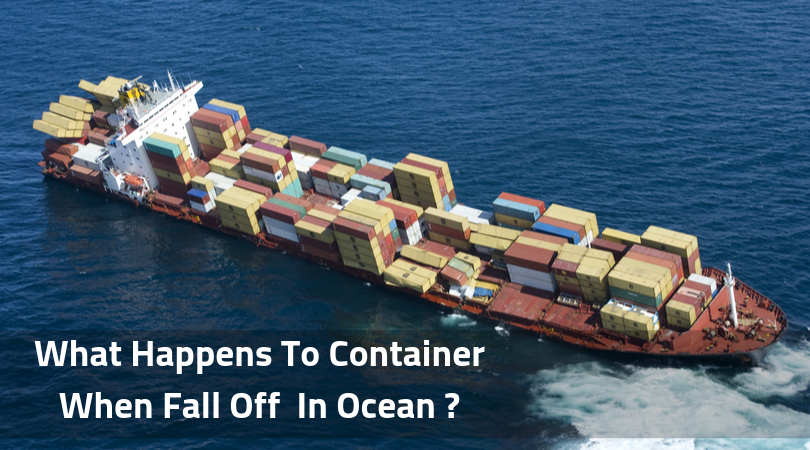
Oceans can be rough and scary sometimes.
What happens when they play combat with big ships?
Do you know an average of 1500 approx. containers lost at sea each year along international shipping routes due to big waves or wind gusts?
Sometimes they land up on shore, but what happens to the containers that land at the bottom of the sea?
Most will sink, though it can take up to two months for some 20-foot containers (a standard size) to disappear beneath the waves. A refrigerated container might be sustained by its insulation and drift on the seas for longer.
But these are not the ones that garner interest.
It might not surprise you that the container disrupts the natural system down. For example, the physical presence of the container provides a surface that immobile animals, such as barnacles, could latch on to, an elevated place from which predators could hunt and it can affect the currents at the floor, as well as the types of animals that live in them.
It also turns out that the hard surface of the container, which they presumed didn’t degrade due to the near-freezing water temperatures some 4,200 feet down, provided a reef-like structure for tubeworms, snails, tunicates and scallops, but not sponges or corals, which are found on natural reefs.
In 2006, thousands of bags of Doritos crisps washed up on the beaches of North Carolina’s Outer Banks after a container carrying them split apart in the Atlantic.
Every day hundreds of LEGO pieces wash up on Perran Sands in Cornwall, and other nearby beaches, after a container ship carrying the toys was hit by a huge wave in 1997, sending tonnes of its cargo overboard.
The most famous such incident was the rubber ducks, better known as the Friendly Floatees. After containment of some 29,000 plastic yellow ducks, red beavers, blue turtles and green frogs were washed into the Pacific in 1992, the little toys began appearing on beaches around the world, from the west coast of America to South America, Australia, and by 2007, Europe.
For one thing, low-floating shipping containers create a hazardous obstacle for other vessels, but if that container carrying hazardous chemicals or pollutants, then it can impact the ocean’s eco-system.
Sources:
https://www.huffpost.com/entry/med-taipei-shipping-container-study_n_5593719
https://www.telegraph.co.uk/travel/travel-truths/lost-container-ships-bizarre-world-of-global-shipping/


.jpg)