9 August 2019
Banks Pushes Maritime Shipping to Reduce its Carbon Footprints
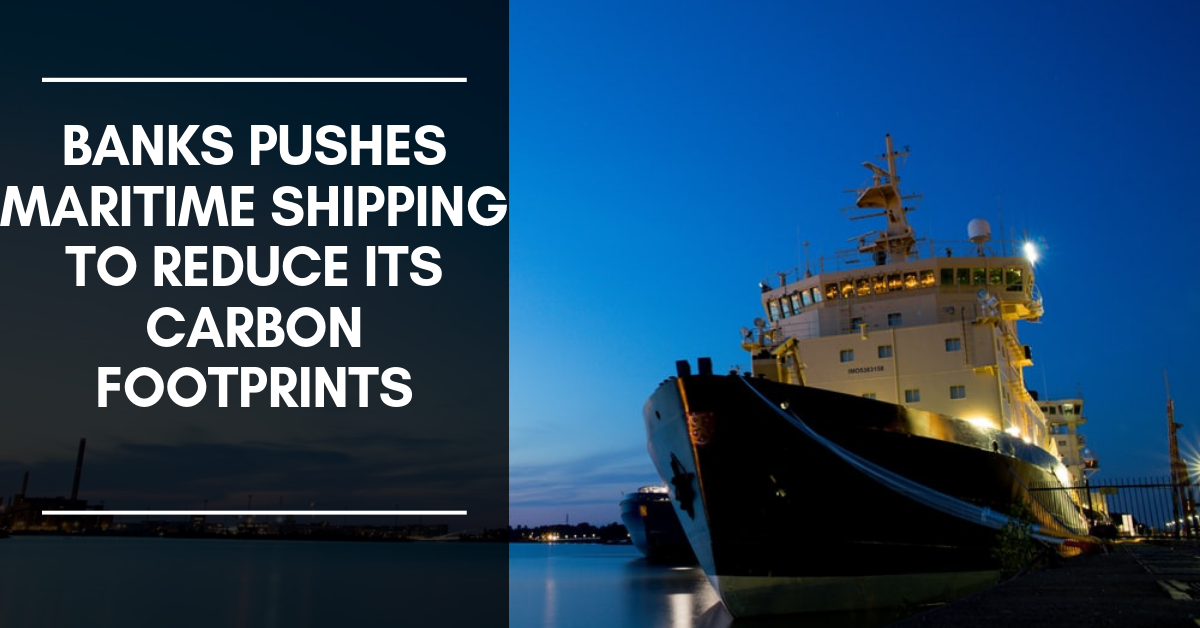
Financial leaders are increasingly waking up to how both companies and financial markets will be affected by climate change. And now some of the world's biggest banks are using their heft to nudge maritime shipping toward decarbonization.
11 major shipping banks — including Citi, Societe Generale, ING and DNB — announced that they've signed onto a new set of guidelines that provide a new climate framework for how they fund shipping vessels.
The new guidelines, called The Poseidon Principles, were created in collaboration with nonprofit Rocky Mountain Institute, shipping group Global Maritime Forum and shipping companies such as Maersk, Euronav and Cargill. Groups that sign onto the principles pledge to assess the carbon intensity of shipping investments and to incorporate climate goals into the portfolios of shipping vessels that they fund.
The 4 key points in the Poseidon Principles are:
Assessment of climate alignment
Signatories will measure the carbon intensity and assess the climate alignment (relative to established decarbonization trajectories) of their shipping portfolios on an annual basis
Accountability
Signatories will only use data types, sources, standards and service providers established by the IMO
Enforcement
Signatories will work with clients and partners to standardize covenant clauses into contracts to ensure access to high-quality data
Transparency
Signatories will publicly acknowledge their signatory status, and portfolio climate alignment scores will be published annually
Three reasons which make it interesting:
Maritime shipping is weird in the overall global climate agenda because it doesn't come under any one country's purview. It was previously left behind (before the IMO's goal), but it's currently responsible for over 2% of global greenhouse gas emissions — and that could grow between 50% to 250% by 2050.
Shipping vessels are also unique in that most of the capital to finance them is provided by various commercial banks (in addition to family equity). So banks have a major leadership role to play here.
These principles could provide a new model for how financiers can collaborate with industry and NGOs to create a voluntary framework for outlier industries.
These Principles apply to lenders, relevant lessors and financial guarantors including export credit agencies. They must be applied by all signatories in all business activities that are credit secured by vessel mortgages or finance leases secured by title over vessel, and where a vessel or vessels fall under the purview of the IMO.
The Poseidon Principles have been created to improve the role of maritime finance in addressing global environmental issues. Working with other climate-focused commitments and organizations such as the Task Force on Climate Related Financial Disclosures (TCFD), the Principles for Responsible Banking , CDP (formerly the Carbon Disclosure Project) and the Energy Transitions Commission , they establish a common baseline that provides a standard for banks to work towards their sustainability goals.
As the Poseidon Principles begin to play a larger role in maritime finance, collaborations and alignment will prove crucial in the transition to a low-carbon economy. The Poseidon Principles are designed to expand to include other important issues such as recycling and scrapping of vessels and other areas where the collective influence of the signatories can help improve the contribution the industry and its lenders can make to society.
Sources:
https://www.greenbiz.com/article/banks-steer-maritime-shipping-toward-climate-goals
https://www.weforum.org/agenda/2019/06/how-banks-are-leading-shippings-green-transition/


.jpg)