19 March 2019
Reefer Shipping: The Rise in Transportation of Refrigerated Goods
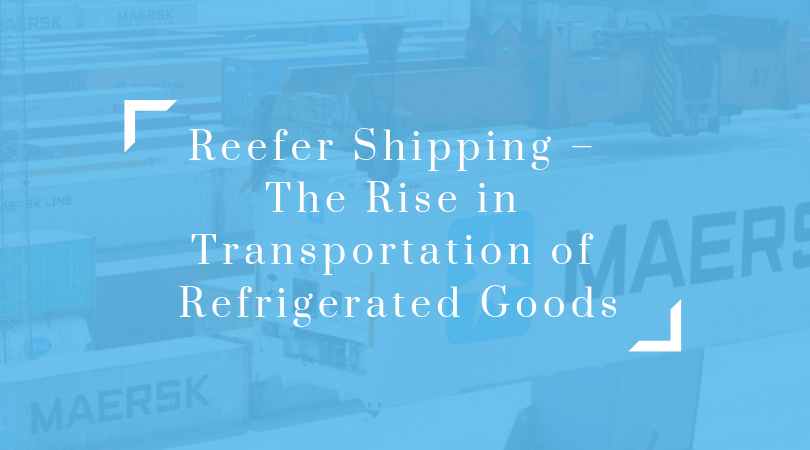
Reefer ships are used for transporting refrigerated cargo, i.e. spoilable goods. These ships normally transport food grains, fruits, fish, milk products and meat. Some countries are not equipped to produce and process such products, and some were easily able to refrigerate and export, hence these reefer carriers were made.
And while there has been some challenges to carriers and ports in terms of high running costs and regular maintenance, the market for reefer shipping has grown at a fast pace.
By cutting energy costs and optimising the quality of cargo by using a combination of new and old technologies, this sector can be valuable in the maritime industry. While there is a bit of innovation already, carriers, terminals and analysts agree that there is more potential for development.
Even Maersk, a leading shipper, is committed towards “cold chain”, and intends to use the Internet of Things (IoT) to transform and improve reefer operations.
While there is enormous pressure mounting on the dry container industry, how can the market for refrigerated containers continue to grow as technology evolves?
The Evolution of Reefers
In 2015 it was reported that refrigerated reefers would emerge as a global trend as opposed to conventional ships. In 2018, this shift had clearly taken effect, with major ocean carriers such as CMA CGM and Ocean Network Express (ONE) have started investing in advanced reefer boxes to support the needs of their long-distance supply chains.
Everyone understands the benefit of reefer containers: a technology of self-contained refrigerated unit, which can bypass cold storage upon its arrival at a destination. The individual reefer has become an easier option for the process of loading and unloading. The controlled-atmosphere systems is definitely a worthy investment.
The State of Play
Drewry has predicted that reefer trade will continue to grow over the next five years at an average annual rate of around 3%, which is below the 3.5% mean of the last ten years. While the overall growth rate of reefer shipping seems to be slowing, “containerised reefer traffic” is accelerating at a much faster pace. This share of the market expanded by 8% in 2017, and it continues to develop year-on-year.
Industry Challenges
While the centre for containerized reefers may be lucrative, the terminals and solution providers that are working within this sector need to overcome a few operational and financial challenges.
The industry expects to receive the best service as well as get the goods delivered in record time. Reefers need to ensure that their facilities are not being overbooked, even in the time-frame and technology that they have. The growth rate itself can sometimes be a challenge to manage operations.
From an environmental point of view as well, for daily operations, stakeholders do need to meet their sustainability goals while maintaining cost-efficient operations. The cost of fuelling a ship carrying multiple reefer units has caused concern, as well as the sulphur emission from the ships.
A Smarter Future
The evolution of new technologies within the sector could present serious benefits to shippers and terminals alike and help them be more cost effective and run longer.
According to Maersk, their temperature-control software called ‘ StarConomy ’ will help carriers absorb the cost of increased energy bills, while the launch of its Sekstant reefer digitalization service is set to provide container operators with increased visibility of their reefer fleets.
Transparency allows for increased efficiency, as real-time access to data on container temperature, atmosphere and energy consumption can help shippers to organise their reefer shipments effectively.
Consumer demand has pushed for the growth of this technology, hence newer technologies and smarter operations will be made to accommodate this.


.jpg)